Warehouse Management Software
Development Services
ZingZee designs, builds, and integrates warehouse management software for distributors, third-party logistics providers, and retailers with their own fulfilment sites. Each system is delivered through the five-phase framework and keeps the scanner, the sales channel, and the ERP on one stock figure.
What warehouse management software development covers
ZingZee delivers custom warehouse management software development for distributors, third-party logistics providers, and retailers, helping operators receive stock against the order, move it through the site on scanners, and keep one stock figure that the sales channel and the ERP agree with. The scope covers receiving, put-away by location, picking by order or by wave, packing, dispatch, returns, cycle counting, lot and serial tracking, and the stock ledger that records every movement. Every movement is a scanned event with its operator, its location, and its time, so a variance is explained from the record and a recall is answered in minutes.
Warehouse and stock software use cases
Replace the annual stocktake with cycle counts
A distributor that closed the site for days each year for a stocktake moves to daily cycle counts by zone on scanners, with variances recorded and explained as they arise. The year-end count becomes a confirmation of the ledger, and the site never closes for counting.
Replace the annual stocktake with cycle counts
A distributor that closed the site for days each year for a stocktake moves to daily cycle counts by zone on scanners, with variances recorded and explained as they arise. The year-end count becomes a confirmation of the ledger, and the site never closes for counting.
Hold one stock figure across shop, marketplace, and ERP
A retailer selling through its own shop, two marketplaces, and a trade counter replaces four stock figures with one ledger that reserves stock as each order arrives. Oversold orders stop, the ERP receives every movement, and the nightly reconciliation report is clean.
Pick lots and expiry dates in the right order
A food and drink wholesaler moves lot and expiry tracking from a spreadsheet beside the racking into the scanner workflow, so put-away records the lot and picking enforces first-expiry-first-out. A recall query returns every customer that received a lot within minutes.
Bill third-party logistics clients from the activity record
A third-party logistics provider holding stock for several clients replaces a manual activity log with a ledger that records every receipt, pick, pack, and storage day per client. The client portal shows live stock and orders, and the monthly invoice is generated from the record.
Process returns into saleable and quarantine stock
An e-commerce fulfilment site gives the returns bench a scanner workflow that identifies the order, grades the item, and moves it to saleable, quarantine, or disposal, with the refund trigger sent to the shop. Returned stock is available for resale the same day.
When custom warehouse management software development is the right choice
Custom warehouse management software development is the right choice when a site runs on the stock module of an accounting package and a printed pick list, and the annual stocktake closes the site for days and still ends in a write-off. It is the right choice when several sales channels sell against the same stock and each holds its own figure, when lots and expiry dates are tracked in a spreadsheet beside the racking, and when a third-party logistics provider bills its clients from a manual activity log. It also suits a site that has outgrown the location model of a packaged product. The strategic assessment confirms which workflow goes live first.
When custom warehouse software is the wrong choice
Custom warehouse software is the wrong choice when a packaged warehouse product with a live support contract already fits the site and the remaining gap is a report or a scanner setting the vendor can supply. It is the wrong choice for a stockroom with a few hundred lines and one sales channel, where a barcode add-on to the accounting package is enough. It is the wrong answer where the underlying problem is supplier lead times or order allocation across sites, which ZingZee's supply chain and order management services cover. It is also the wrong choice when a peak period is weeks away and no window exists for a parallel count.
Why ZingZee is a dependable warehouse software development company
The ledger changes when the shelf does
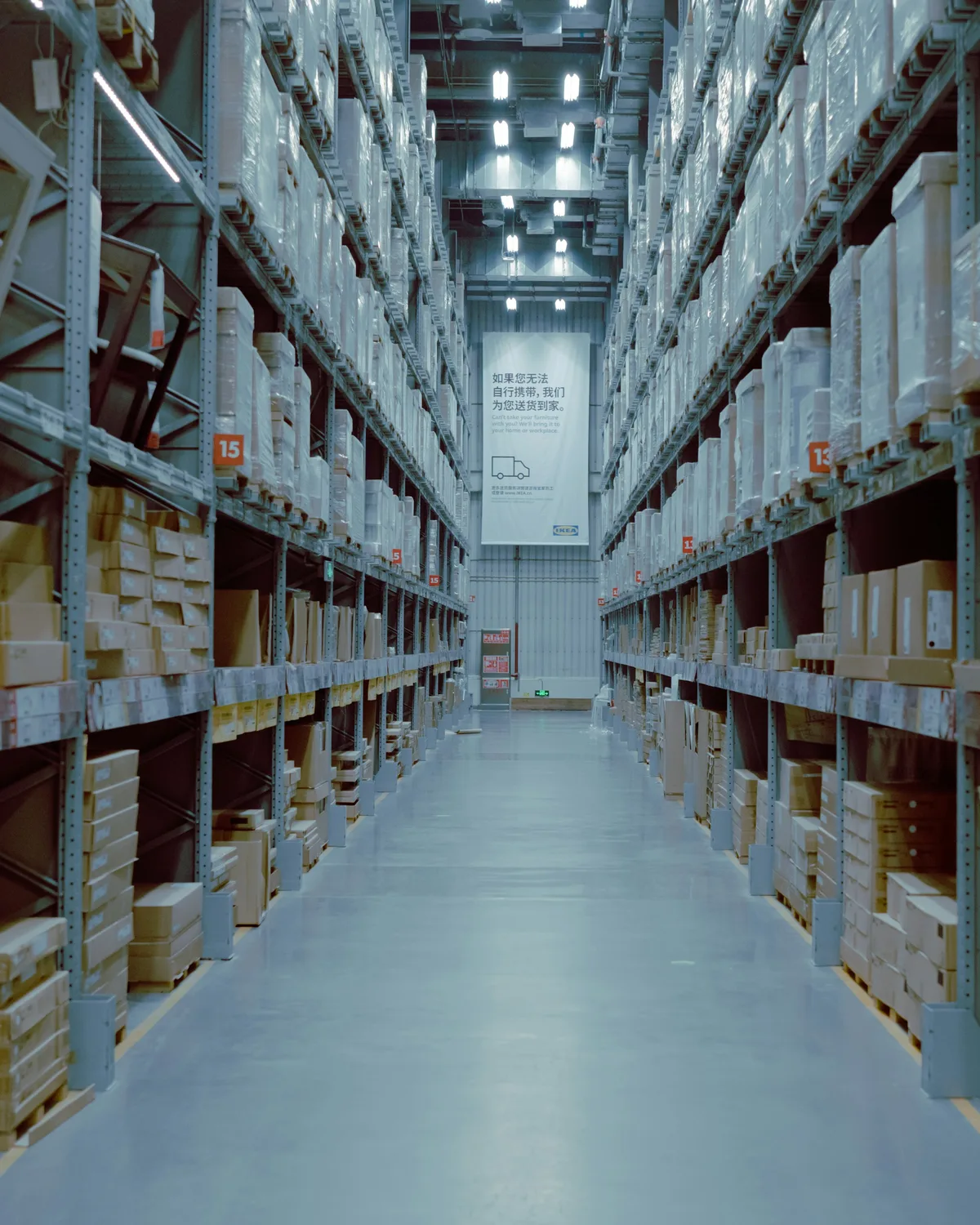
Every movement in a ZingZee warehouse system is confirmed by a barcode scan at the location before the ledger changes, and every scan carries its operator, location, and time. A variance has a history to read, and a manager sees which zone, which shift, and which product drift.
Built for the scanner in a cold aisle
The floor apps run on rugged Android scanners and on ordinary phones, with large targets, one action per screen, and an offline queue that holds scans when the wifi drops between racks. A picker never waits on the network, and a scan made in a dead spot is posted when the signal returns.
ERP stays the financial record
ZingZee keeps SAP or the existing ERP as the owner of stock value and connects the warehouse ledger to it by IDoc, API, or file exchange, with a nightly reconciliation. The finance team keeps its month-end process, and the warehouse gains a ledger that matches it.
A written quote per phase
ZingZee quotes the strategic assessment in writing and each phase, such as goods-in, picking, or cycle counting, once its scope is set, so a warehouse manager approves a known figure and can schedule each go-live around peak periods and the parallel count.
Warehouse management software development services ZingZee provides

Receiving, put-away, and location management
ZingZee builds goods-in against the purchase order or the advance shipping notice with lot and quantity capture, directed put-away to a location chosen by size, velocity, and expiry, and a location model of zones, aisles, bays, and bins that the floor can walk in sequence.

Picking, packing, and dispatch on scanners
ZingZee builds picking by order, batch, or wave with a walk sequence and barcode confirmation at each location, packing with carton selection and weight checks, and dispatch scanning against the carrier manifest, so a wrong item or a short pick is caught on the floor and never at the customer's door.
Cycle counts and variance handling
ZingZee schedules counts by zone, by value, and by exception, runs them blind on the scanner, and compares each to the ledger on submission. Every variance is recorded with the counter, the location, and the cause, and an approver posts the adjustment, so the count history shows which zones drift.

Lot, expiry, and serial number tracking
ZingZee holds stock per product, location, lot, and status, with first-expiry-first-out picking where the product needs it, quarantine for damaged and returned goods, and a serial trace from receipt to dispatch for goods a customer may recall or return under warranty.

ERP, channel, and client portal integrations
ZingZee connects the warehouse to SAP or another ERP for stock value and movements, to online shops and marketplaces for available stock and orders, to carriers for labels, and, for third-party logistics providers, to a client portal with live stock, order status, and activity-based billing per client.
Warehouse software engagement scope
Deliverables
The scanner workflows, stock ledger, and integrations in production, source code and infrastructure definitions in the client's repositories, the location model and data dictionary, the adapter specifications, the test suite with results, the parallel count and reconciliation reports, the operations runbook, and the training material for supervisors and pickers.
Deliverables
The scanner workflows, stock ledger, and integrations in production, source code and infrastructure definitions in the client's repositories, the location model and data dictionary, the adapter specifications, the test suite with results, the parallel count and reconciliation reports, the operations runbook, and the training material for supervisors and pickers.
Included as standard
A strategic assessment on the floor with supervisors and pickers, architecture and data model design, build in reviewed increments, automated and manual testing including a live shift on the scanners, the adapter to the current ERP and the first sales channel, a parallel count before cut-over, go-live support, and an aftercare phase.
Priced separately
Scanner, printer, and label hardware, a wifi survey and access points, further sales channel or carrier adapters, a client portal with billing for third-party logistics providers, integration to automation such as conveyors or sorters, the aftercare arrangement agreed at go-live, and any module the assessment identifies outside the original brief.
What the client provides
The location layout and a walk of the site, the product master with barcodes, lots, and dimensions, credentials for the ERP, sales channels, and carriers, an export of current stock and open orders, a warehouse manager who can approve designs, and pickers for the live shift tests and the parallel count.
Outside the engagement
Racking, barcode labelling of products that arrive unlabelled, the wifi installation, customs and bonded warehouse compliance, carrier contracts, and the ERP configuration by its vendor remain with the client, with ZingZee supplying the technical documentation each task needs.
How a warehouse software project with ZingZee runs
A warehouse software project with ZingZee runs through the five-phase delivery framework. The strategic assessment walks the site with the supervisors, works a shift on the current pick list, reads the product master and the location layout, and maps the systems in place, including the ERP and each sales channel, before pricing the first phase. The AI roadmap fixes the location model, the stock ledger design, the scanner workflow screens, the adapter specifications for the ERP and the channels, and the order in which the workflows go live. Integration and deployment builds each workflow in reviewed increments, with pickers testing it on live stock in one zone before it is released to the floor, and cuts over after a parallel count in which the new ledger and the old figures are reconciled line by line. Adoption and enablement trains supervisors and pickers on the release and stays through a hypercare period. Governance, optimisation and scale reviews count accuracy, put-away rules, and adapters as the product range and the channels change.
Strategic assessment
We assess how the business operates today: its processes, its data and the systems it runs on. From that we identify the use cases with the highest return and confirm the organisation is ready to adopt them, so the programme starts from a defined baseline.
AI roadmap
Findings become a phased roadmap that balances early wins with the longer build. ZingZee sets the milestones, the resourcing and the governance that keep delivery on schedule and aligned to business objectives.
Integration and deployment
Our engineers develop, validate and deploy the solution into your production environment, integrated with the enterprise systems you already run and sized for the workloads it will carry.
Adoption and enablement
Enablement programmes prepare business users and technical teams to work with the new capability, and structured change management ensures the organisation captures the full value of what has been deployed.
Governance, optimisation and scale
Ongoing governance, monitoring and optimisation keep the solution accurate, compliant and performing. Proven solutions are then scaled across departments and regions under the same data governance standards.
Warehouse and stock software tooling
ZingZee builds warehouse systems on a stack chosen for correctness under a count, fast scanner screens, and the availability of engineers who can maintain it. The tooling covers:
- Python services for the stock ledger, put-away rules, and count scheduling
- PostgreSQL with append-only movement tables and point-in-time recovery
- Android scanner apps with an offline queue, and a web console for supervisors
- Label and document printing over standard printer languages
- SAP and other ERP integrations by IDoc, API, or file exchange, with a nightly reconciliation
- Sales channel, marketplace, and carrier adapters behind one integration layer
- Automated tests for every workflow and a replay tool for parallel counts
Warehouse software engineering practices
Every stock ledger ZingZee builds is append-only, so the quantity in a location is always the sum of its movements and a correction is a new movement that references the one it reverses. Scans are idempotent, so a retried submission from a scanner never doubles a pick. Adjustments require a cause and an approver, and count history is kept so drift can be traced to a zone. Stock data outside production is masked to the product and location level, and no client of a third-party logistics provider can see another client's stock. Every release carries a change record with the approver, the tests, and the rollback plan, and no release reaches the floor during a peak week.
Cost and time for warehouse management software
The cost of warehouse management software development depends on the number of sites and zones, the workflows in scope, the depth of lot, expiry, and serial tracking, the sales channels and carriers to integrate, the ERP link, and the volume of stock and history to migrate. A cycle counting workflow on scanners beside an existing stock system is a matter of weeks. A full floor system with goods-in, picking, packing, and dispatch reconciled to the ERP is a matter of months. A multi-site or multi-client platform with a portal and billing is a programme delivered in phases across a year. ZingZee provides a written estimate after the strategic assessment and quotes each phase in writing once its scope is set.
Operations ZingZee builds warehouse software for
ZingZee builds warehouse management software for wholesale distributors with thousands of lines and a trade counter, for third-party logistics providers that hold stock for several clients under one roof, and for retailers and online shops running their own fulfilment site.
It builds for food and drink wholesalers whose stock carries lots and expiry dates, for spare parts and industrial suppliers whose stock carries serial numbers, and for manufacturers whose finished goods store feeds both a sales channel and a production line. The same inventory management software development approach serves bonded and cold-store operators.
What happens next?
You send a description of the site, the number of lines and locations, the sales channels and carriers you use, and the systems you run today.
An engineer reads it and replies within two working days with the shape of a strategic assessment and a written quote for that phase.
You sign a non-disclosure agreement if you need one, and you receive a proposal with the site walk, the deliverables, the team, and the order in which the workflows would go live.
Frequently asked questions
Straight answers on Warehouse and stock work with ZingZee.