Automated quoting and grid application platform for a solar installer
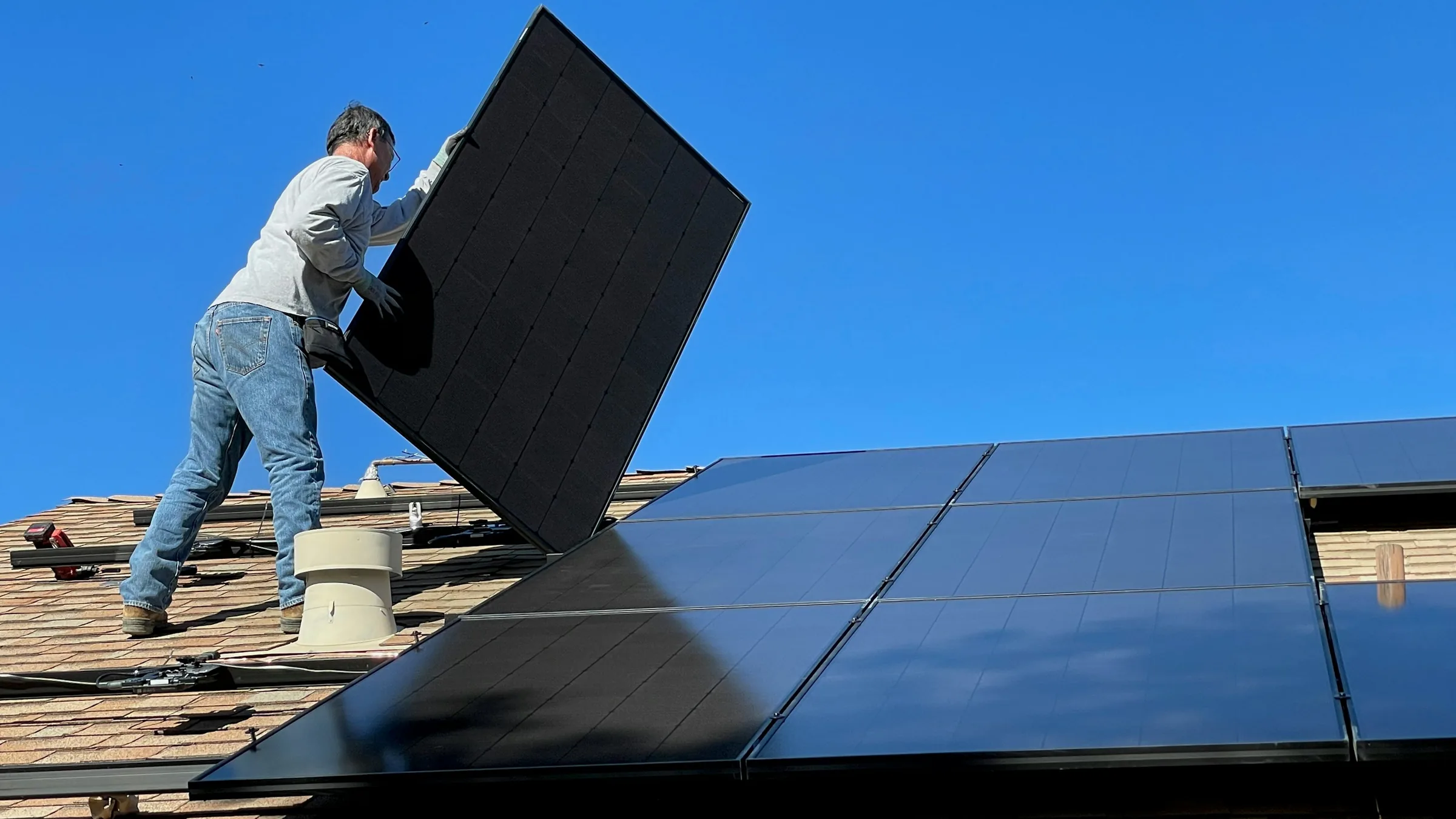
A solar installer in Cyprus ran sales and grid applications on spreadsheets and phone calls, and every quote began with a site visit. ZingZee built a platform that quotes from satellite imagery and the customer's bill, then collects the documents and chases the grid approval.
- Client
- A photovoltaic installer in Cyprus, fitting rooftop systems for homes and small commercial buildings across the island.
- Sector
- Energy
- Headline result
- 5x systems installed a month
At a glance
One platform carries each customer from a search for solar to a connected system.
A photovoltaic installer in Cyprus, fitting rooftop systems for homes and small commercial buildings across the island.
ZingZee was engaged to take a business that ran on spreadsheets and phone calls and make it the fastest quoter in its market.
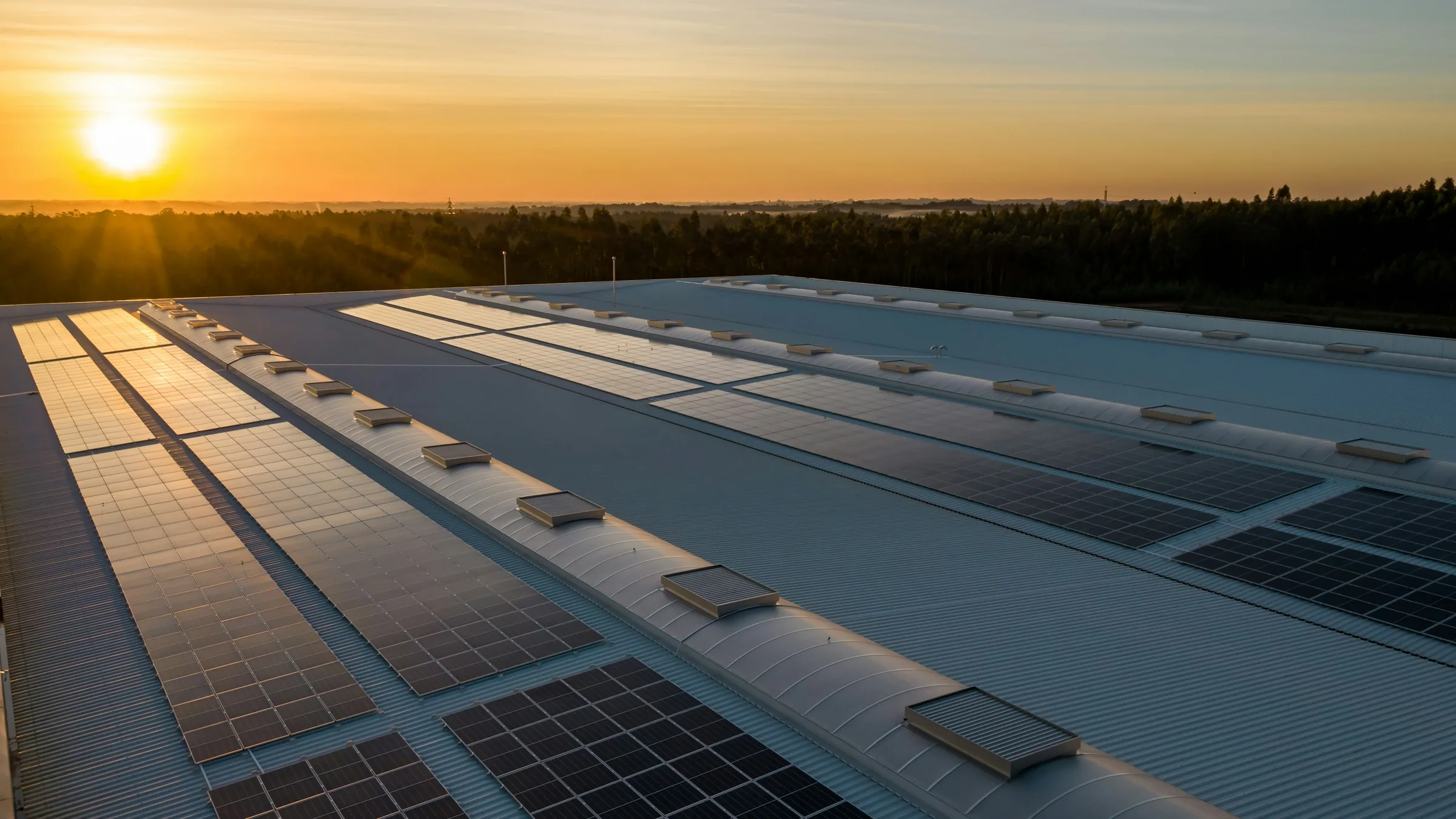
ZingZee built the whole path from a search for solar to a connected system: a website with automated Google Ads and SEO, a quoting tool that surveys the roof from satellite imagery and prices the system from live stock, a customer and operations system, and a paperwork engine that collects every document the application needs and chases the electricity authority until the meter is changed.
Outcomes
Quote turnaround from four to six days, with a site visit, to under ten minutes from the address and the bill.
Leads from word of mouth, around 15 a month, to more than 300 a month from ads, search, referrals and the survey tool.
Site visits before a quote from every enquiry to fewer than one in five, reserved for jobs the survey flags.
Grid applications approved without resubmission from around half to 96%.
Signed contract to grid connection from around 16 weeks to seven.
Office time spent chasing documents and the electricity authority from around 60 hours a week to under 8.
The challenge
Every enquiry began with a site visit, and the grid application took longer than the sale.
The company employs its own crews, buys panels, inverters, batteries and mounting kit through European distributors, and handles the grid-connection application for every customer as their representative to the Distribution System Operator. 16 kW on single phase, and the engagement spanned the closure of net metering at the end of 2025 and the move to net billing, under which exported power earns the wholesale rate rather than the retail one.
The visit
An installer drove to the property, climbed a ladder, measured the roof by hand around the water tank and the solar water heater that sit on most Cypriot roofs, and photographed the meter cabinet to check the phase of the supply. The gap between the enquiry and the quote ran to four to six days, and in a market where the customer had asked several installers on the same afternoon, the first quote in the inbox usually won.
The paperwork
An application to the Distribution System Operator needs a signed form, a recent bill and either the last six bills or a twelve-month usage statement, the plot plan, the title deed or the ownership title with the construction licence, the owner's consent where the applicant is not the owner, the installer's drawings and declarations, and the fee. Customers sent the documents one at a time over WhatsApp, often in the wrong format, and applications went in incomplete, came back weeks later with a query, and went in again.
The old process, step by step
- 01The enquiry. A customer rang the owner or sent a WhatsApp message, and the details stayed in the chat. Around one enquiry in three was never booked for a visit.
- 02The site visit. An installer and a van spent half a day on each visit, around 40 kilometres and around EUR 120 in wages and fuel before anything was quoted. Six to eight visits a week went out, and around a third never became a sale.
- 03The sizing. The owner sized the system in the evening in a spreadsheet, looking up the yield by hand and guessing the household's self-consumption, at 45 minutes to an hour per quote.
- 04The quote. The quote went out from a template with prices copied from the last supplier invoice, and by the time a customer signed the price of the kit had often moved, and the margin with it.
- 05The follow-up. There was no follow-up beyond the owner's memory, and around 40% of quotes never received a second contact.
- 06The contract. The contract was signed on paper at a second visit, another half day, and the deposit arrived whenever the customer got round to it.
- 07The documents. The office asked the customer for seven to nine documents over WhatsApp and email. Each took an average of 11 messages to obtain in a usable form, and a complete set took three to four weeks.
- 08The application. The pack was compiled by hand and submitted to the operator, and around half came back with a query, each return adding four to eight weeks.
- 09The wait. Status was checked by telephone when someone remembered to ring, nobody tracked the queue, and the wait from signature to meter change averaged around 16 weeks.
- 10The install. Kit was ordered when the approval arrived, so an out-of-stock inverter delayed the install by weeks, and crews scheduled on a whiteboard occasionally arrived at a roof whose application had not been approved.
- 11After connection. No system was monitored, so a failed inverter was discovered when the customer noticed the next bill, and an export limit set wrongly at commissioning went unnoticed for months.
The cost of the old process
Over a year, the old process cost the installer the following.
- 01
Around EUR 38,000 a year was spent on site visits that never became a sale.
- 02
Close to 3,000 office hours a year went on chasing documents and the operator, and customers were still lost in the wait.
- 03
Leads came only through word of mouth.
- 04
When the scheme changed to net billing every open quote had to be reworked by hand, because the return now depended on how much of the output the household used itself.
The survey replaced the half-day site visit with a 40-second assessment, and site visits are now reserved for the roofs the tool flags.
Quote turnaround from four to six days, with a site visit, to under ten minutes from the address and the bill.
The solution
ZingZee built the platform in the order the business earns, starting with the lead and ending with the connected system.
The website and the ads came first, so leads arrived while the rest was built, then the survey and the quote, then the operations system with the paperwork engine inside it, and the monitoring and the customer app last.
The survey and the eligibility engine
The roof survey from satellite imagery
A customer enters an address or drops a pin. The tool pulls satellite imagery at around 25 centimetres a pixel, matches the building against Microsoft's building footprints and OpenStreetMap, measures each roof face with its pitch and orientation, and runs a vision model over the image to find air-conditioning units, water tanks, solar water heaters, chimneys and shading from neighbouring buildings. The usable area after the 0.5 metre edge setbacks comes back with a panel layout drawn on the roof in around 40 seconds, and a roof the model cannot read with confidence is flagged for a visit. The half-day visit became a 40-second survey, and the van goes out only to the roofs the tool flags.
The bill
The customer photographs the last electricity bill. The tool reads the consumption, the tariff, the supply phase and the meter type, and builds a monthly consumption profile so the system is sized for what the household uses. Under net billing this profile sets the self-consumption share, the battery worth proposing and the payback the customer will see, and self-consumption is no longer estimated by hand.
Eligibility
The property is checked against the Cyprus rules: the caps by supply phase, whether the building has a permit on record, whether the address already has a system on the meter, and which scheme and grant apply on the date of the quote. The installer stopped quoting systems the operator would later refuse.
The quote
The system size and the yield are calculated from the roof and the bill, using the European Commission's PVGIS radiation data for the coordinates. Panels, inverters, batteries and mounting kit are picked from the installer's live stock and priced from the current supplier rates, so the quote moves with the cost of the kit. The customer receives a proposal with monthly generation, self-consumption, export income, payback and a 25-year return graph in under ten minutes, and the margin on a signed job is the margin that was quoted.
The paperwork engine and the sales pipeline
The pipeline
Google Ads and organic search feed the website, the website feeds the survey tool, and every survey becomes a lead in the customer system with its proposal attached. Follow-ups go out on a schedule by email and WhatsApp, the customer signs the contract and pays the deposit online, and a lead that goes quiet is handed to a salesperson with the history in front of them. Enquiries no longer stall in a chat thread, and the second contract visit is no longer needed.
The document collection
On signature the system asks the customer once for every document the application needs, with an example of each and a link to upload from a phone. Each upload is checked on arrival for the right document type, a readable image and a name that matches the contract, and the customer is chased by WhatsApp and email until the last one is in. A complete set now arrives in days, and nobody asks for a document twice.
The application pack
The installer's drawings and declarations are generated from the survey and the chosen kit, the pack is checked against the operator's current rules and fee, and the application is submitted and logged. Every application sits on a board with its stage, its age and who it is waiting on, and the system chases the operator at each stage until the meter is changed, so no application can be forgotten.
Crews and routes
Each signed job is scheduled against crew capacity and the kit on hand. Materials are reserved the day the contract is signed, the van route for each crew is planned by geography each evening, and a job still waiting on the operator cannot be booked. Crews arrive with the kit and the approval in hand.
The customer-facing pieces
The customer portal
From the first survey the customer has a page showing the proposal, the contract, the documents still needed and the stage the application has reached. Status calls fell away, and customers who could see progress stopped cancelling in the wait.
After the install
Every connected system reports to the platform at panel level. An inverter fault, a string producing under its neighbours or an export limit set wrongly raises an alert to the service desk within 15 minutes, warranty dates and the maintenance schedule are set at connection, and a panel clean is proposed when generation drifts below the forecast for the weather. The installer finds a fault before the customer does.
The customer app
The customer sees live generation, savings to date against the proposal and the payback countdown, and can refer a neighbour with one tap. The app proposes a battery or an EV charger when the bill data shows an evening load or a car, and the referral engine credits the customer when the neighbour's system is connected. Referrals became a measured lead source, and battery sales now start from the consumption data.
The platform runs on a cloud server ZingZee manages.
What was hard
- 01
Measuring pitch from directly above.
Satellite imagery is taken from overhead, so a roof face's pitch cannot be read from the image alone, and a flat Cypriot roof with a parapet, a water tank and a solar water heater confuses a model trained on gabled European housing. We derived pitch from shadow length and the sun's position at the time of capture, cross-checked the footprint against two building datasets, and set a confidence threshold below which the tool asks for a visit. On the 60 roofs the installer had measured by hand, the survey came within 6% of the measured area on 54, and the six it missed were the six it flagged.
- 02
Reading the bill.
Bills arrive as photographs taken at an angle, in Greek or English, in more than one layout, with the figures that matter in different places on each. We trained a document model on around 400 anonymised bills and fall back to asking the customer for two figures when confidence is low, so a bad photograph costs one question and no site visit.
- 03
The operator's forms and the rule change.
The application pack needs specific signed forms, drawings in the operator's format and a fee, and the scheme changed from net metering to net billing mid-engagement, which changed both the paperwork and the financial model behind every quote. We built the pack rules and the tariff model as a versioned rules file outside the code, so the office updated the rules on the day of the change and every quote issued after it was on the new scheme.
How it was delivered
The build ran over 26 weeks in four phases, each live on its own, so the installer was selling from the new parts while the later ones were built.
- Weeks 1 to 6The website and lead capture. The website, the Google Ads account and the search work went live with a lead form, and leads rose from around 15 a month to over 80 before the survey tool existed.
- Weeks 4 to 12The survey and the quote. The roof survey, the bill reader, the eligibility check and the quoting tool were tested against the 60 measured roofs, then released on the website as a free survey.
- Weeks 10 to 20The operations system. The customer system, the document collection, the application board and the crew scheduling went live together, and the three spreadsheets were frozen the same day. The 41 open jobs were entered once, by hand, over two days.
- Weeks 18 to 26Monitoring and the app. Connected systems were brought onto the monitoring platform, starting with the 30 most recent installs, and the app went to every customer with a connected system.
Systems that stayed in place
The accounting stayed with the accountant's package, which receives invoices and deposits from the platform and nothing else. Pricing stays with the distributors, whose price lists are imported each week, and WhatsApp stayed as the customers' channel, with messages going out from the platform and replies landing in the customer record. The operator's process is the operator's: the platform assembles, submits, logs and chases, and the decision remains theirs.
The rollout
The office ran the spreadsheets and the new system side by side for three weeks, and staff training took a day. Nothing was migrated: the spreadsheets were retired the day the operations system went live, and the owner priced his last quote by hand in week nine.
The results
The installer now sells from the survey and runs its operations from the application board.
What is next
The survey tool will be opened to estate agents and developers, so a listing or a new build carries a solar proposal before the buyer asks. The platform will bid the installer's connected batteries into the grid's flexibility market as one fleet when that market opens to residential systems, and it can run for any installer in Greece or Cyprus with a change to the rules file.