Postgres and Supabase Development Services
Postgres holds the bookings, ledgers, stock records and documents of the platforms in ZingZee's case studies, with Supabase providing authentication, file storage and generated APIs on top. Engineers design the schema, write the migrations, tune the queries and keep the database backed up and monitored in production.
- Cyprus, engineers across the globe
- Five-phase delivery
- Typed, tested, handed over
The database behind every platform ZingZee runs
What Postgres and Supabase are
ZingZee's Postgres and Supabase development services cover the design, build, and operation of the database that holds a platform's records. Postgres is an open-source relational database that stores tables of bookings, invoices, stock lines, and documents, and enforces the rules between them, so an invoice number cannot be skipped and a night cannot be sold twice. Supabase is a set of services built on Postgres that adds user login, roles, file storage, and ready-made APIs, so a platform gains those three pieces without a separate system for each. For a business owner, the database is the part of a platform that must be right first, because every screen, report, and integration reads from it.

What we do with Postgres and Supabase
Postgres is the database behind every platform ZingZee builds. The villa booking platform holds 97,326 nightly prices and a single calendar-blocks table that every availability reader consumes. The accounting platform keeps its ledger in Postgres as the book of record, and the retail warehouse tool runs on a Postgres mirror of a SAP database kept in step every 30 seconds.
Schema design comes before any screen is built. Engineers model the business rules as tables, constraints and foreign keys, so that an owner cannot be paid twice, a booking cannot occupy the same night twice and an invoice number cannot be skipped. Migrations are versioned and run in the pipeline.
Supabase adds the pieces most platforms need around the database: authentication with roles, row-level security so a subcontractor sees only their own work orders, file storage for receipts and photographs, and generated REST and realtime APIs for the screens. ZingZee runs Supabase on managed hosting or self-hosted on the client's own server, depending on where the data must live.
In production the database is backed up on a schedule with restores tested, slow queries are logged and indexed, and connection pooling is in place. The client receives the schema documentation, the migration history and the backup runbook.
When Postgres and Supabase are the right choice
Postgres is the right choice for any platform whose records carry rules: money that must balance, dates that cannot overlap, stock that cannot go negative, and sequences that cannot skip. It suits a company that holds structured records, documents, and a search index together, because Postgres handles JSON, full-text search, and vector data in one place. Supabase is the right addition when a platform needs login, roles, file storage, and an API, and the client wants those in one place with access rules applied inside the database. Both are open source and self-host, so they suit a company that must keep its data in a chosen country or on its own server. ZingZee uses Postgres behind every platform it builds and adds Supabase where the assessment finds the need.
When Postgres and Supabase are the wrong choice
Plain Postgres is the wrong choice where a workload is a stream of millions of events per second with no rules between them, where a purpose-built time-series or event store sits beside the database for that one job. Supabase is the wrong addition where a company already runs a single sign-on system and a file store, since a second login and storage layer would duplicate both. A database rewrite is the wrong answer to a slow platform whose delay sits in one missing index or one query that returns every row, because that is fixed in an afternoon by measuring the query. ZingZee's assessment reads the workload and the existing systems before any of these cases is decided.
Why Postgres and Supabase
Constraints keep the business honest
Rules written as database constraints hold whatever the application does, so a duplicate payout or a double booking is refused at the point of writing.
One database for records, documents and search
JSON columns, full-text search and vector extensions mean a platform keeps its structured records, its document metadata and its search index in the same place.
Row-level security by role
Supabase applies access rules inside the database, so an owner, a manager and a subcontractor query the same tables and each sees only their own rows.
Auth, storage and APIs without a second system
Supabase supplies login, file storage and generated APIs on top of Postgres, which removes three services a platform would otherwise run separately.
Open source and portable
Postgres and Supabase can be hosted anywhere, including on a dedicated server in the client's chosen country, with no licence fee and no lock-in to a cloud vendor.
Use cases
Booking and availability systems
Calendars, nightly prices and holds modelled so that availability is one query and a voided booking releases its dates instantly.
Ledgers and accounting platforms
A cash ledger as the source of collected money, invoice sequences held in the database and drill-down from any figure to its source line.
Mirrors of ERP and SAP data
A read-optimised copy of an operational system on a cloud server, kept in sync and queried by dashboards without touching the source.
Multi-tenant portals
Owners, customers or subcontractors logging into one platform with row-level security scoping every query to their account.
Postgres and Supabase development services ZingZee provides
Schema design for new platforms
ZingZee models the business rules as tables, constraints, and foreign keys before any screen is built, so a duplicate payout, a double booking, or a skipped invoice number is refused at the point of writing. Migrations are versioned and run in the pipeline.
Supabase authentication, storage, and APIs
Login with roles, row-level security so each account sees only its own rows, file storage for receipts and photographs, and generated REST and realtime APIs for the screens, run on managed hosting or self-hosted on the client's server.
Data migration from existing systems
An importer runs in dry-run mode until the totals reconcile, keeps the original record beside the mapped one, and becomes the master only after the old system has run in parallel and the two agree.
Mirrors of ERP and SAP data
A read-optimised copy of an operational system on a cloud server, kept in step on a short cycle and verified against the source nightly, so dashboards query the mirror and the source is never slowed or modified.
Performance, backup, and operations
Slow queries are logged and indexed against the real patterns, connection pooling is set, backups run on a schedule with restores tested, and monitoring alerts on disk, connections, and replication lag before a fault reaches users.
Database development scope
- Deliverables
- The schema, its versioned migrations, the row-level security policies, and the Supabase configuration, committed to the client's repository and running in production with the data loaded and reconciled.
- Included as standard
- Migrations run in the deployment pipeline, index review against real queries, scheduled backups with a tested restore, slow-query logging, a data dictionary, and a recorded handover.
- Priced separately
- Migration from each additional source system, an ERP or SAP mirror with its sync worker, pgvector search features, and a dedicated database server are scoped and quoted separately.
- What the client provides
- Access to the source systems and their exports, the rules behind each record, the access model by role, a decision on where the data must live, and sign-off on the reconciliation.
- Outside the engagement
- Supabase and cloud subscriptions, dedicated server contracts, and source-system licences are the client's to hold. Postgres itself carries no licence cost, and the schema is the client's from the first commit.
How a database project
with ZingZee runs.
A database project with ZingZee runs through the five-phase delivery framework. The strategic assessment lists the records, the rules they must obey, the systems that read and write them, and where the data must live, and produces a schema and a migration order in writing. The AI roadmap fixes which tables and integrations come first. Integration and deployment builds the schema, the migrations, and the backups, and takes each release into use with monitoring in place. Adoption and enablement trains the team that will query and maintain the database. Governance, optimisation and scale keeps query times, disk, and backup restores under review as the data grows. Each phase opens with a scoping workshop and closes with a hardening workshop, where the schema is tested with the worst-case records, and a delivery workshop, where the client's staff sign it off.
Strategic assessment
We assess how the business operates today: its processes, its data and the systems it runs on. From that we identify the use cases with the highest return and confirm the organisation is ready to adopt them, so the programme starts from a defined baseline.
AI roadmap
Findings become a phased roadmap that balances early wins with the longer build. ZingZee sets the milestones, the resourcing and the governance that keep delivery on schedule and aligned to business objectives.
Integration and deployment
Our engineers develop, validate and deploy the solution into your production environment, integrated with the enterprise systems you already run and sized for the workloads it will carry.
Adoption and enablement
Enablement programmes prepare business users and technical teams to work with the new capability, and structured change management ensures the organisation captures the full value of what has been deployed.
Governance, optimisation and scale
Ongoing governance, monitoring and optimisation keep the solution accurate, compliant and performing. Proven solutions are then scaled across departments and regions under the same data governance standards.
Industries where ZingZee applies Postgres
ZingZee has applied Postgres and Supabase in travel and hospitality, where a booking platform holds tens of thousands of nightly prices and one calendar-blocks table that every availability reader consumes; in financial services, where an accounting platform keeps its ledger in Postgres as the book of record; in retail and distribution, where a warehouse tool runs on a Postgres mirror of a SAP database kept in step every 30 seconds; in insurance, where a policy-checking tool stores documents and their extracted facts; and in energy and automotive, where customer platforms hold quotes, orders, and documents by account.
Postgres and Supabase tooling
ZingZee's database work uses one set of tools on every project, so a client who reads about a booking schema can expect the same on a ledger. The tooling covers:
- Postgres on a supported major version, managed or self-hosted on a dedicated server
- Supabase for authentication, row-level security, file storage, and generated APIs
- Versioned migrations held in the repository and run in the deployment pipeline
- Connection pooling, slow-query logging, and index review against the real query patterns
- Scheduled backups with point-in-time recovery and restores tested on a calendar
- pgvector and full-text search for document retrieval and AI features inside the same database
Database engineering practices
Every rule that can be written as a constraint is written as one, so the database holds the rule whatever the application does. Migrations are versioned, reviewed, and run in the pipeline, and a migration that changes a large table is tested against a copy of production first. Access is scoped by role inside the database, so a subcontractor, an owner, and a manager query the same tables and each sees only their own rows. Slow queries are logged and indexed against the patterns the platform makes, and connection pooling is set from the first deployment. Backups run on a schedule, restores are tested to prove they work, and monitoring alerts on disk, connections, and replication lag. At handover the client receives the schema documentation, the migration history, the access model, and the backup runbook.
Cost and time for database work
The cost of database work depends on the number of tables and rules, the systems that must be mirrored or migrated, the volume of records, the access model, and where the data must live. A schema for a single tool with a handful of tables is a matter of days. A platform schema with a ledger, a booking calendar, and role-based access is a matter of weeks and is built in the order the screens need it. A migration from several systems into one schema is priced after the assessment, because the state of the source data drives the reconciliation effort. ZingZee provides a written estimate after the strategic assessment and phases the budget to the client's priorities.
What happens next?
You send a description of the records, the rules they must obey, and where the data has to live.
An engineer reads it and replies within two working days with the shape of a strategic assessment.
You sign a non-disclosure agreement if you need one, and you receive a proposal with the phases, the estimate, and the team.
Related case studies.
Real projects, real numbers.
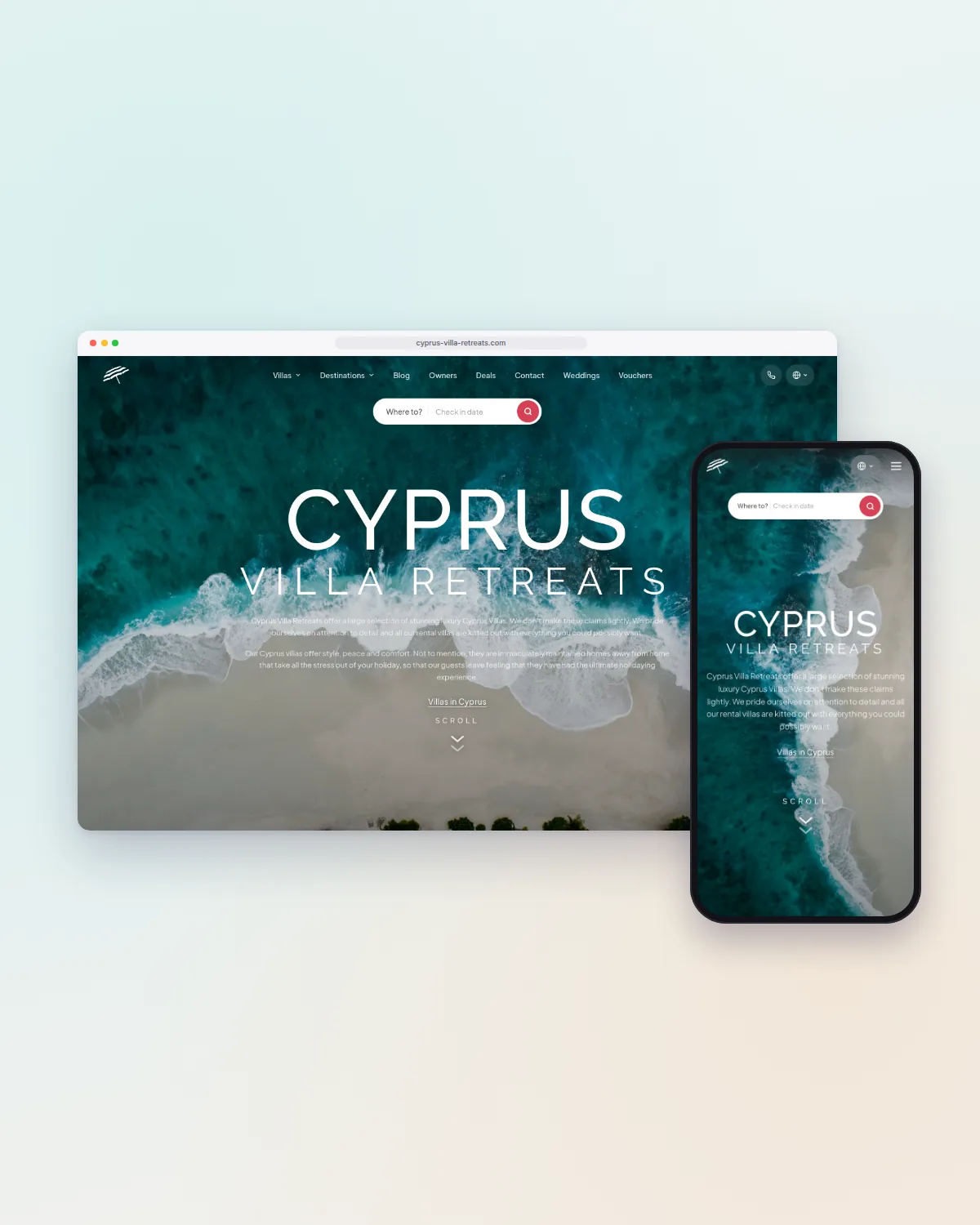 22 staff, from 58PlatformCustom booking and operations platform for Cyprus Villa RetreatsOne custom platform replaced more than 30 software products; the company now runs more than 450 villas with 22 staff, up from 70 villas and 58 staff.Read the case study
  5,000 invoices cleared in 4 daysAccountingAutomated invoice processing and bank reconciliation for a Cyprus villa management groupAI invoice processing and automated bank reconciliation, built into a villa management group's own system, cleared a backlog of 5,000 invoices in four days.Read the case study
  EUR 45k cash released from slow stockRetailLive SAP mirror and replenishment tool for a stationery retailerA live mirror of the SAP database with a replenishment engine and an AI dashboard cut stock-outs on fast-moving lines from 8% to under 1%.Read the case study
  5 min per policy check, from about an hourInsuranceAI insurance policy checking software for a commercial brokerA policy desk reads each schedule and wording, compares the renewal with the expiring cover, and cites every point to its clause; a check now takes five minutes.Read the case study
  0 order lines re-keyed into the ERPDistributionERP-integrated customer ordering platform for a wholesale distributorA customer ordering app integrated with the warehouse system and the ERP delivers orders as structured lines, and no order is re-keyed by hand.Read the case study
 Frequently asked questions
Straight answers on Postgres and Supabase work with ZingZee.