Python Development Services
Python services behind platforms that run every day
Python is ZingZee's first pick for the services behind a platform: typed APIs, scheduled workers, document pipelines and the code that talks to a language model. Engineers in Cyprus and across the globe deliver each service in five phases against the client's live data.





What Python is
ZingZee's Python development services cover the design, build, and support of the services behind a business platform in Python, the language ZingZee uses by default for the back end. Python is a general-purpose language with a plain syntax and the largest set of ready-made libraries for data, documents, and integration of any language in common use. The pricing rules of a booking system, the matching of invoices to a bank feed, the sync worker that mirrors an ERP, and the pipeline that reads a policy document are all written in Python at ZingZee. For a business owner, Python is the reason a rule stated in one sentence becomes a tested function in an afternoon, and the reason the next engineer can read it.
What we do with Python
Python runs the service layer of most platforms ZingZee has delivered: the booking, pricing and payment engine of the villa platform, the ledger and bank matching of the accounting system, the worker that mirrors SAP Business One every 30 seconds, and the extraction layer of the policy desk. Services are written as typed, documented APIs with a schema the front end and the tests share.
Python is chosen where the work is data, documents or rules: nightly pricing runs across tens of thousands of villa nights, invoice reading with several VAT rates per document, replenishment targets recalculated from sales, and the deterministic checks that sit in front of a language model. The same language covers the API, the batch job and the model call, so one team owns the whole path.
Services run on dedicated cloud servers with Postgres and Supabase behind them, Redis for queues and caching, and an audit entry on every write. Each service is handed over with its test suite, its deployment pipeline and a runbook, and ZingZee continues to run it after go-live where the client prefers.
When Python is the right choice
Python is the right choice for the rules, the data, and the integrations of a business platform: anything that prices, allocates, reconciles, reads a document, or talks to another system. It suits companies whose platform must grow in scope over years, because Python code stays readable as it grows and the hiring pool is wide. It suits any work that touches data science, document reading, or language models, where the libraries are Python first. ZingZee recommends Python on Postgres and Supabase for most new back ends in its strategic assessment, and pairs it with Go or Rust where one component needs more speed.
When Python is the wrong choice
Python is the wrong choice for a component that must handle tens of thousands of connections at once or answer within a millisecond, where ZingZee moves that one component to Go or Rust and keeps the rest in Python. It is the wrong choice inside an estate whose team and tooling run on Java or .NET, where a second language adds cost without benefit. It is also the wrong choice for a browser interface, which is written in TypeScript. ZingZee's assessment states the case per component, and most platforms end with Python for the rules and one or two components elsewhere.
Why Python
Readable code, shorter handovers
Python reads close to plain English, so a client's own developer or accountant can follow a pricing rule or a VAT calculation without a briefing.
One language from API to model
The HTTP layer, the scheduled job and the call to a language model share types and tests, so a change in one is caught in the others.
Typed APIs with generated documentation
Request and response schemas are declared once, validated on every call and published as documentation the front end builds against.
The data and AI ecosystem
Libraries for data frames, PDF reading, OCR, embeddings and model APIs are mature and maintained, so document and analytics work starts from tested parts.
Batch and sync work
Nightly pricing, 30-second mirrors and digest-based change detection run as Python workers with time budgets and alerts when a run overruns.
Python services behind platforms that run every day

Use cases
Booking and pricing engines
Seasons, deals, gap discounts and overrides produce a price for every night, with card holds and transfers recorded against each booking.
Accounting and bank matching
Invoices read from photos, coded to a chart of accounts, and matched to bank lines and card settlement batches to the cent.
ERP and SAP synchronisation
A read-only mirror of an ERP refreshed every 30 seconds and verified nightly, with the app writing back only what the client allows.
Document reading with a language model
Policy wordings, purchase orders and supplier invoices extracted deterministically first, with the model reading only what rules cannot.
Internal APIs for apps and portals
One service serving the staff app, the customer portal and the owner statements from the same ledger.
Python development services
ZingZee provides.
Services and APIs for business platforms
ZingZee builds the pricing, booking, accounting, stock, and workflow services behind a platform in Python, typed and tested, with a documented API that the front end, the mobile app, and partners call.
Integration and sync workers
Workers that mirror an ERP, match a bank feed, update a channel, or post back to an accounting package are built in Python with logging, retry, and a morning report of anything that failed.
Document reading and data pipelines
Invoices, policies, and forms are read into structured records, and scheduled pipelines build the tables that dashboards and forecasts read, with every output traceable to its source.
Work inside an existing Python codebase
Django, Flask, and FastAPI applications are extended, upgraded, and tested in place, starting with an audit of the version, dependencies, and test coverage.
Automation of manual back-office work
Spreadsheets, re-keyed forms, and month-end exports are replaced with Python jobs that run on a schedule, write to one record of truth, and report when a record does not fit the rule.
Python development scope
- Deliverables
- The services and APIs in the client's repository, with their schema migrations, typed contracts, scheduled jobs, and the records they own, released to production and processing real work by the end.
- Included as standard
- Pytest suites built from the worst-case records, type checks on every build, structured logging and alerting, containers with a deployment pipeline, staging and production configuration, a runbook per service, and a recorded handover.
- Data migration artefacts
- Where a legacy system is replaced, ZingZee delivers the mapping document, a rehearsed migration script, and a reconciliation report that shows every record and balance agreeing before the switch.
- Priced separately
- Front ends and mobile apps over the API, integrations with vendors that need a commercial agreement, a private language model for document reading, and further services after the first phase are quoted separately.
- What the client provides
- Access to the systems the services connect to, the rules as the business applies them today, sample records including the awkward ones, test accounts, and a person who approves each release.
- Outside the engagement
- Hosting contracts, vendor API subscriptions, model API fees, and third-party licences are the client's to hold. ZingZee specifies each one, sets it up on the client's account, and connects it.
How a Python project with ZingZee runs
A Python project with ZingZee runs through the five-phase delivery framework. The strategic assessment reads the rules people apply by hand, the systems the platform must connect to, and the data, and produces a list of services in order of value. The AI roadmap fixes the order and the split between Python and any other language. Integration and deployment builds each service against the live data and takes it into use behind the existing screens. Adoption and enablement trains the client's team to run and extend the services. Governance, optimisation and scale keeps error rates, response times, and backups under review. Each phase opens with a scoping workshop and closes with a hardening workshop, where the release is tested with worst-case records and load, and a delivery workshop where the client signs off.
- Strategic assessment
- AI roadmap
- Integration and deployment
- Adoption and enablement
- Governance, optimisation and scale
Industries where ZingZee applies Python
ZingZee's Python services price and book the stays of a villa rental company across hundreds of properties, run the ledger and bank reconciliation of an accounting system that replaced a four-person team's manual work, mirror an SAP system for a retailer's warehouse dashboard, read policy documents for an insurance broker, and hold the order and stock rules of a distributor's ordering platform. The same practice serves energy, automotive, and aviation training clients on the same stack.
Python tooling
ZingZee's Python work uses one set of tools across every service, so the handover reads the same whether the service prices a booking or reads a document. The tooling covers:
- Python 3 with type hints checked on every build
- FastAPI for services and APIs, Django where an admin and ORM fit the job
- Postgres with Supabase as the database, with typed queries and migrations
- Pytest with fixtures built from the worst-case records
- Structured logging, monitoring, and alerting on every service
- Containers deployed through a pipeline the client's team can run
Python engineering practices
Every rule a business owner could state in a sentence is written once, in one function, with a test that proves it against the real records. Services are typed, and data entering from a browser, a webhook, or a partner feed is validated at the boundary. Integrations log every call and retry every failure, and a failed job is visible the next morning with the record it failed on. Secrets live outside the codebase, access is scoped by role, and backups are restored on a schedule to prove they work. A release goes live only when the suite passes, and new figures are reconciled to the old system before the old one is switched off.
Cost and time for a Python back end
The cost of a Python back end depends on the number of rules and records, the systems it must connect to, the volume of data and traffic, the security and compliance requirements, and the state of any existing code. A single service that replaces one spreadsheet or one manual reconciliation is a matter of weeks. A full platform back end that prices, books, invoices, and reconciles for a business is a matter of months and is delivered service by service, each into daily use before the next begins. Data migration from a legacy system adds a rehearsal and a reconciliation to the plan. ZingZee provides a written estimate after the strategic assessment and phases the budget to the client's priorities.
What happens next?
You send a description of the rules, the data, and the systems the back end must connect to.
An engineer reads it and replies within two working days with the shape of a strategic assessment.
You sign a non-disclosure agreement if you need one, and you receive a proposal with the phases, the estimate, and the team.
Related case studies.
Real projects, real numbers.
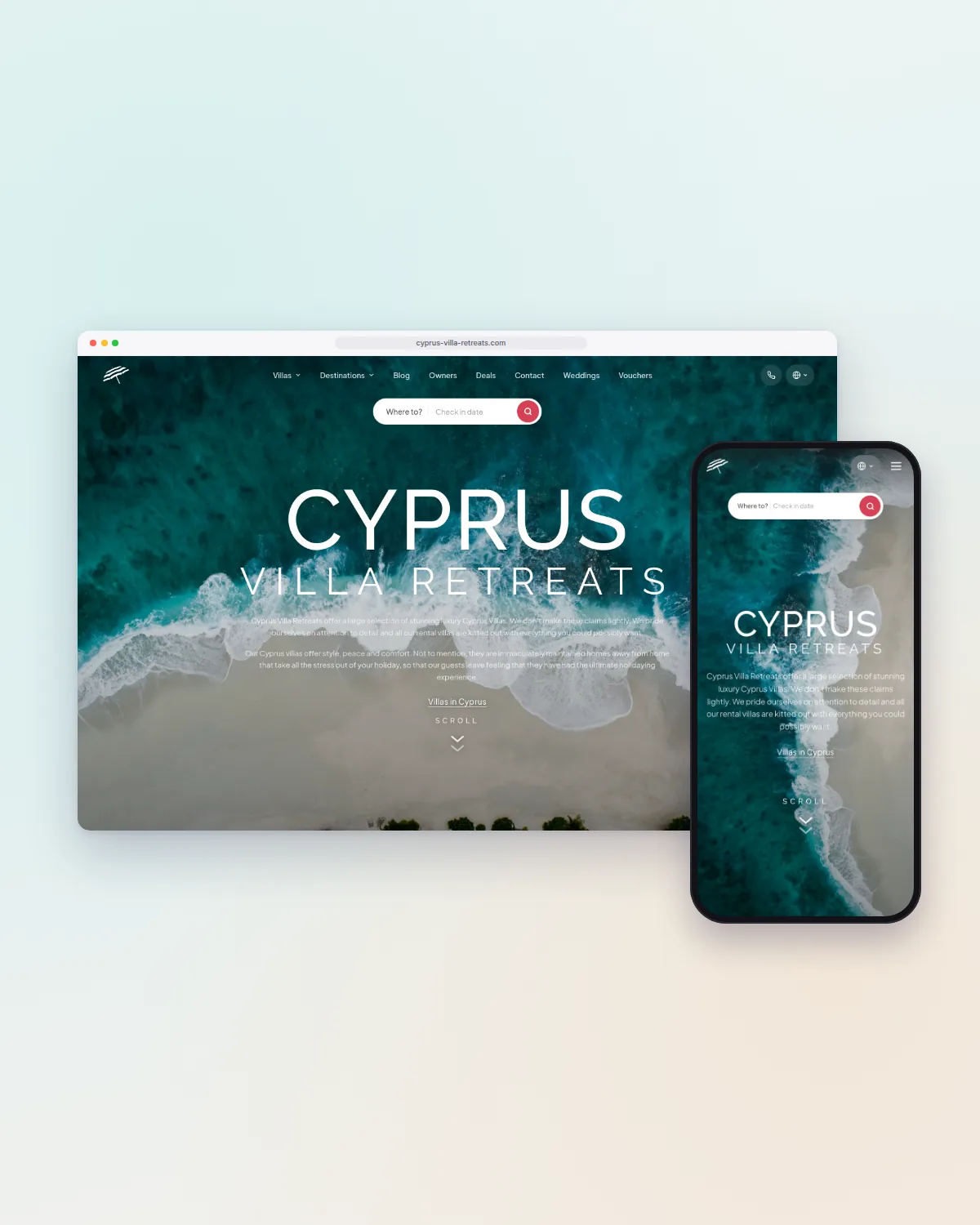 22 staff, from 58PlatformCustom booking and operations platform for Cyprus Villa RetreatsOne custom platform replaced more than 30 software products; the company now runs more than 450 villas with 22 staff, up from 70 villas and 58 staff.Read the case study
  5,000 invoices cleared in 4 daysAccountingAutomated invoice processing and bank reconciliation for a Cyprus villa management groupAI invoice processing and automated bank reconciliation, built into a villa management group's own system, cleared a backlog of 5,000 invoices in four days.Read the case study
  EUR 45k cash released from slow stockRetailLive SAP mirror and replenishment tool for a stationery retailerA live mirror of the SAP database with a replenishment engine and an AI dashboard cut stock-outs on fast-moving lines from 8% to under 1%.Read the case study
  5 min per policy check, from about an hourInsuranceAI insurance policy checking software for a commercial brokerA policy desk reads each schedule and wording, compares the renewal with the expiring cover, and cites every point to its clause; a check now takes five minutes.Read the case study
  0 order lines re-keyed into the ERPDistributionERP-integrated customer ordering platform for a wholesale distributorA customer ordering app integrated with the warehouse system and the ERP delivers orders as structured lines, and no order is re-keyed by hand.Read the case study
 Frequently asked questions
Straight answers on Python work with ZingZee.