Integration
Services
ZingZee connects the systems a client already pays for, from ERP and warehouse software to payment providers, channel calendars and messaging, so data is keyed once and read everywhere. Integrations are read-only by default, write only through a vendor's API under agreement, and are verified against the source on a schedule.



What integration is
ZingZee's integration services connect the systems a company already pays for, from ERP and warehouse software to payment providers, channel calendars, and messaging, so a fact is keyed once and read everywhere. An integration is a mapped, monitored data path between two systems, with one system named as the record for each field and a written rule for what happens when the two disagree or the connection drops. Reads come first, through a restricted account over an encrypted connection, and writes are added only where the vendor provides an API and agrees to its use. For a business owner, integration ends the re-keying of orders, bookings, and invoices between screens, and the disagreement between two systems about the same number.
What we do with Integrations
An integration at ZingZee is a mapped, monitored data path between two systems, with one system named as the record for each field. The engineers start by listing where each fact lives, which system is right when two disagree, and what happens when a connection drops. Those rulings are written down before any code, because most integration failures are disagreements about ownership rather than faults in the code.
Reads come first. A mirror or a polling worker pulls the source data through a read-only account over an encrypted connection, and a nightly verification repairs any row that has drifted. Writes are added only where the vendor provides an API and agrees to its use, as with the distributor in the case studies, whose orders are written to the ERP alone while the warehouse system picks them from there.
The connections ZingZee has built and runs in production include SAP Business One, ERP and warehouse vendor APIs, Revolut for card holds and payouts, bank feeds, Airbnb and VRBO calendar feeds, Google Ads, Twilio and WhatsApp messaging, and an accountant's package that receives invoices and nothing else. Each one is logged, alerted on failure and documented for the client's own team.

Why Integrations
One record per fact
Every field has a named system of record, so a stock figure or a booking date is never two numbers.
Read-only until agreed otherwise
Sources are read through restricted accounts, and writes go only through an API the vendor has approved in writing.
Verified on a schedule
A nightly check compares the mirror to the source and repairs drift, and the dashboard marks any figure not yet verified.
Failure is visible
A dropped feed, a rejected write or an unmatched line raises an alert to a named person instead of failing silently.
The source system is untouched
SAP, the ERP or the accountant's package keeps doing what it did, and the integration sits beside it.
Connect the systems a business already runs, safely
Use cases
ERP and warehouse mirrors
A live copy of SAP or another ERP on a cloud server, with stock transfers posted back on a scan.
Payments and bank feeds
Card holds, payouts and settlement batches matched to bookings and invoices as they arrive.
Channel and calendar sync
Availability from owner calendars and booking platforms merged into one blocks table per property.
Messaging and voice
WhatsApp, SMS and telephone connected to the booking or customer record so a reply lands in context.
Accounting hand-off
Invoices and deposits passed to the accountant's package and nothing else, keeping the platform the book of record.
When to invest in integration
A company invests in integration when staff key the same order, booking, or invoice into two systems, when two departments quote two different figures for the same stock line, or when a calendar on one platform is out of step with another. It is the right choice when an ERP such as SAP Business One must stay the record for stock and accounts while a dashboard, a pick list, or an ordering portal reads from it within seconds. It suits payment and bank feeds that must be matched to bookings and invoices as they arrive, channel calendars that must merge into one availability table per property, and messages on WhatsApp, SMS, and telephone that must land against the customer record. ZingZee maps every fact to its owning system in the assessment before any connection is built.
When an integration is the wrong answer
An integration is the wrong answer when the two systems disagree because one of them holds bad data, in which case the capture process is fixed first and the connection would only spread the fault. It is the wrong answer where a vendor refuses any access route, and the assessment states that so the client can decide with the vendor. It is the wrong answer where a manual step happens twice a month and takes ten minutes, since the connection costs more than the re-keying. It is also wrong to write into a source system before a read-only phase has proven the mapping. ZingZee's assessment lists each fact, its owner, the access route, and the volume before an integration is proposed.
Integration services ZingZee provides
ERP and warehouse mirrors
ZingZee builds a live copy of SAP Business One or another ERP on a cloud server through a read-only user over an encrypted connection, verified against the source nightly, with stock transfers posted back through the vendor's API on a scan where the vendor agrees.
Payment providers and bank feeds
Card holds, payouts, and settlement batches matched to bookings and invoices as they arrive, with each transaction logged, unmatched lines raised to a named person, and the platform kept as the book of record.
Channel and calendar synchronisation
Availability from owner calendars and booking platforms merged into one blocks table per property, with conflicts resolved by the rule agreed in the assessment and every change logged.
Messaging and voice connected to the record
WhatsApp, SMS, email, and telephone connected to the booking or customer record, so a reply lands in context and a message classified by the platform reaches the right person.
Accounting and vendor API hand-offs
Invoices and deposits passed to the accountant's package and nothing else, orders written to a vendor's ERP under a signed agreement, and every write logged with the response the vendor returned.
Integration scope
- Deliverables
- The sync workers, the mirror tables, the queue definitions, and the mapping documents in the client's repository, each connection live in parallel with the manual process and then switched.
- Included as standard
- Idempotent writes with retries, nightly verification against each source, alerts to a named person on a dropped feed or a rejected write, a runbook per connection, and a recorded handover.
- Vendor access
- ZingZee drafts the API access request and attends the vendor call, and the client signs the agreement, because the access is granted to the business and stays with it.
- Priced separately
- Each connection after the agreed set, writes where only reads were scoped, a Go receiver where the event rate demands it, and screens over the mirrored data are quoted separately.
- What the client provides
- Credentials or read-only database users for each system, the vendor contacts, the reconciliation rules as finance applies them, and a person who signs off each connection.
- Outside the engagement
- Vendor API subscriptions and per-message fees, payment provider charges, and source-system licences are the client's to hold. ZingZee sets each account up in the client's name.
How an integration project with ZingZee runs
An integration project with ZingZee runs through the five-phase delivery framework. The strategic assessment maps every fact to its owning system, records the access route each vendor allows, and writes down the rule for conflicts and dropped connections. The AI roadmap orders the connections by what unblocks the business first. Integration and deployment builds each connection with a read-only phase before any write and runs it in parallel with the manual process until the two agree. Adoption and enablement trains the staff whose re-keying stops and the team that reads the alerts. Governance, optimisation and scale keeps verification, drift, and vendor changes under review as new systems join. Each phase opens with a scoping workshop and closes with a hardening workshop, where each connection is tested under failure and reconciled to the source, and a delivery workshop, where the client's staff sign it off.
- Strategic assessment
- AI roadmap
- Integration and deployment
- Adoption and enablement
- Governance, optimisation and scale
Cost and time
for an integration.
The cost of an integration depends on the number of systems, the access route each vendor allows, whether writes are in scope, the volume and rate of records, and the reconciliation rules. A read-only mirror of one ERP with nightly verification is a matter of weeks. A set of connections across payments, calendars, messaging, and accounting for one platform is a matter of months and goes live connection by connection, each in parallel with the manual process first. A vendor negotiation for API access is scheduled in the assessment and can set the timeline. ZingZee provides a written estimate after the strategic assessment and phases the budget to the client's priorities.
Industries where ZingZee applies integration
ZingZee has applied integration services in retail and distribution, where a warehouse tool mirrors SAP Business One and a distributor's orders are written to the vendor's ERP under agreement; in travel and hospitality, where channel calendars, card holds, payouts, and guest messaging connect to the booking record; in financial services, where bank feeds and card settlements match to invoices in an accounting platform; in energy, where a solar installer's platform reads irradiance data, advertising spend, messaging, and system monitoring; and in automotive, where auction feeds, messaging, and an accounting package connect to an importer's platform.
Integration tooling
ZingZee's integration work uses one set of tools on every connection, so a client who reads about an ERP mirror can expect the same on a payment feed. The tooling covers:
- Python sync workers with logging, retries, and idempotent writes, with Go where the event rate demands it
- Postgres as the mirror and the platform's record, with each imported row keeping its original values beside the mapped ones
- Read-only database users with forced encryption, and vendor APIs under signed agreement for writes
- Redis queues for events that arrive faster than they can be processed
- Nightly verification that compares the mirror to the source and repairs drift
- Alerts to a named person on a dropped feed, a rejected write, or an unmatched line
Integration engineering practices
Every integration ZingZee ships names one system of record per field, and the rule for conflicts is applied in code, with each imported row keeping its original values beside the mapped ones. Reads come first through a restricted account over an encrypted connection, and writes are added only through an API the vendor has approved in writing, after a read-only phase has proven the mapping. A nightly check compares the mirror to the source and repairs drift, and any screen marks a figure not yet verified. Workers retry with backoff and are idempotent, so a repeated event produces one record. A dropped feed, a rejected write, or an unmatched line raises an alert to a named person. Each connection runs in parallel with the manual process until the two agree. At handover the client receives the mapping document, the workers, the verification, the alerts, and a runbook per connection.
What happens next?
You list the systems involved and the fact that is keyed twice today.
An engineer reads it and replies within two working days with the shape of a strategic assessment.
You sign a non-disclosure agreement if you need one, and you receive a proposal with the phases, the estimate, and the team.
Related case studies.
Real projects, real numbers.
 EUR 45k cash released from slow stockRetailLive SAP mirror and replenishment tool for a stationery retailerA live mirror of the SAP database with a replenishment engine and an AI dashboard cut stock-outs on fast-moving lines from 8% to under 1%.Read the case study
  0 order lines re-keyed into the ERPDistributionERP-integrated customer ordering platform for a wholesale distributorA customer ordering app integrated with the warehouse system and the ERP delivers orders as structured lines, and no order is re-keyed by hand.Read the case study
 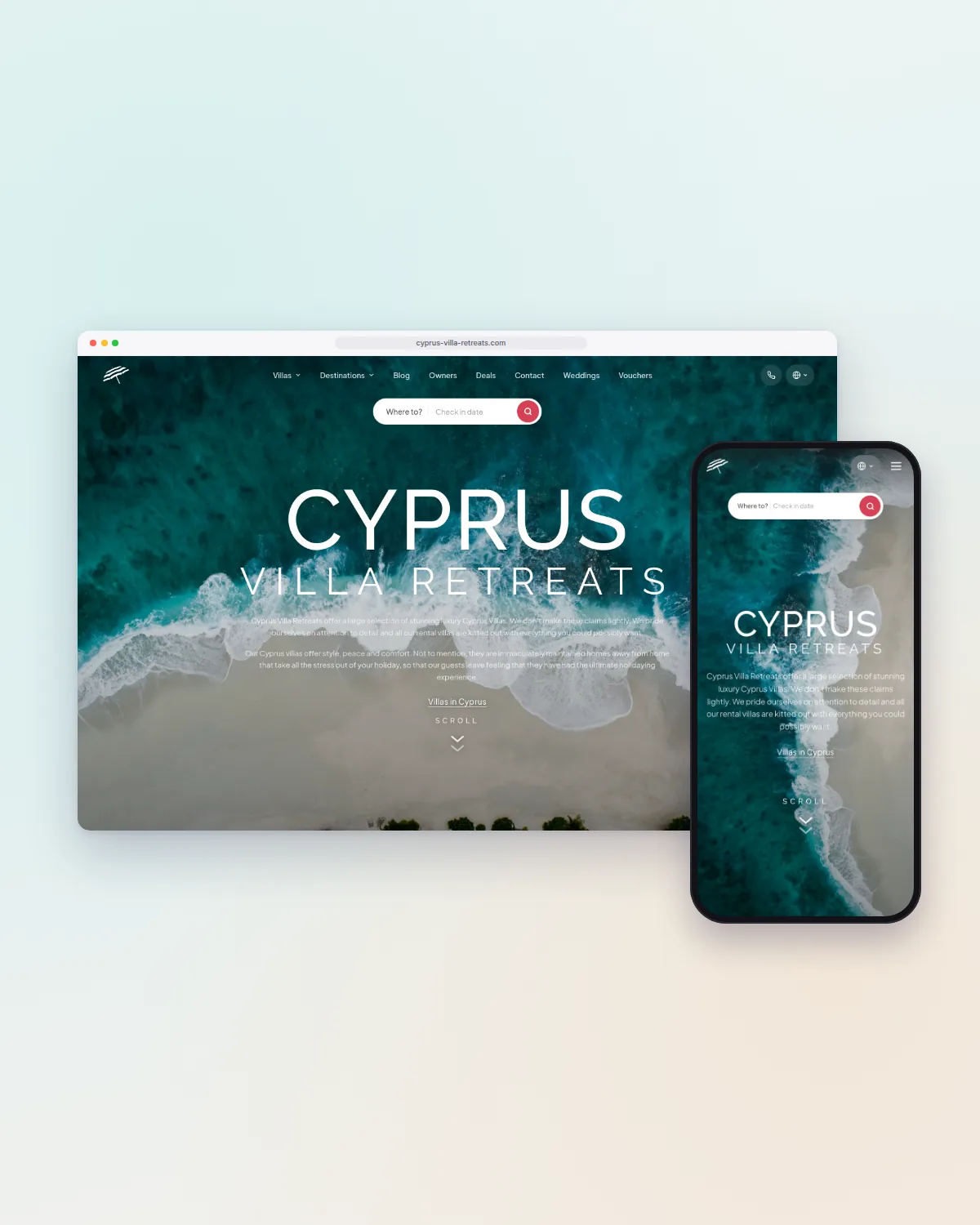 22 staff, from 58PlatformCustom booking and operations platform for Cyprus Villa RetreatsOne custom platform replaced more than 30 software products; the company now runs more than 450 villas with 22 staff, up from 70 villas and 58 staff.Read the case study
  5,000 invoices cleared in 4 daysAccountingAutomated invoice processing and bank reconciliation for a Cyprus villa management groupAI invoice processing and automated bank reconciliation, built into a villa management group's own system, cleared a backlog of 5,000 invoices in four days.Read the case study
  5x systems installed a monthEnergyAutomated quoting and grid application platform for a solar installerSatellite roof surveys, bill reading, and grid-rule checks produce a priced quote in ten minutes; the installer now fits five times as many systems.Read the case study
  8 sec from auction lot to bid ceilingAutomotiveAuction bidding and inventory platform for a used-car importer in CyprusAuction watchers, a landed-cost calculator, and automated bidding on Japanese and UK auctions carry every car from bid to buyer on one record.Read the case study
 Frequently asked questions
Straight answers on Integrations work with ZingZee.